Napoleon Bonaparte's reign over France left an indelible mark on the country's built environment. From sweeping urban redesigns to grand commemorative monuments, the architecture of his era reflected both his personal ambitions and the revolutionary ideals of the French state. Buildings were not merely functional — they were political statements, designed to project power, legitimacy, and the glory of a new France.
Neoclassicism as Napoleon's architectural language
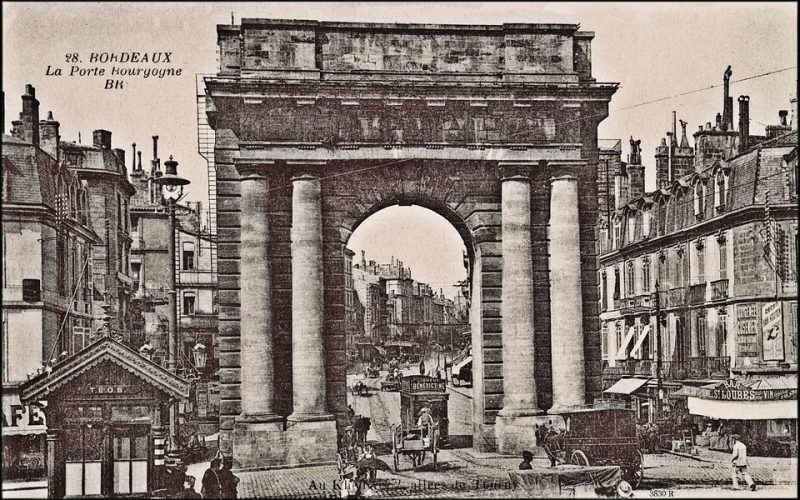
The dominant style of Napoleonic architecture was Neoclassicism, a movement that drew heavily on the forms of ancient Greece and Rome. Napoleon deliberately aligned himself with the great empires of antiquity, and his buildings echoed that ambition. Clean lines, imposing columns, and symmetrical facades became the visual vocabulary of an era defined by conquest and consolidation. It was a style that communicated authority without having to say a word.
Paris reimagined
Napoleon had grand plans for Paris. He envisioned it as the most beautiful city in the world — a capital worthy of a modern empire. Several of his most ambitious projects transformed the city's skyline and street plan in ways that are still visible today. The Arc de Triomphe, commissioned in 1806 to honour the French army, stands as perhaps the most recognisable symbol of Napoleonic ambition. Though it wasn't completed until 1836, long after his exile, the vision was entirely his.
Public buildings and civic purpose
Beyond monuments, Napoleon invested heavily in buildings that served civic and administrative functions. The Rue de Rivoli, flanked by its elegant arcaded facades, was designed to bring order and uniformity to central Paris. The Temple de la Gloire — later converted into the Church of La Madeleine — was originally conceived as a monument to Napoleon's military victories. Even when the intended use changed, the architectural ambition remained intact.
The influence of ancient Rome
Roman imperial architecture was a constant reference point throughout this period. The Vendôme Column, modelled on Trajan's Column in Rome, was erected in the Place Vendôme to commemorate the Battle of Austerlitz. Clad in bronze reliefs cast from captured enemy cannons, it served as a powerful piece of visual propaganda. Similarly, the Fontaine du Châtelet and various triumphal arches scattered across the empire drew directly from Roman precedent, reinforcing Napoleon's self-image as the inheritor of a great imperial tradition.
Architecture beyond France
Napoleonic architectural influence extended well beyond the borders of France. As his empire expanded across Europe, French architectural tastes followed. In cities such as Amsterdam, Milan, and Warsaw, Neoclassical buildings were constructed to reflect the values and aesthetics of the new order. Local traditions were often sidelined in favour of a more unified, empire-wide visual identity — a built manifestation of political centralisation.
A legacy set in stone
The architecture of Napoleon's time endures as one of the most visible legacies of his rule. Long after the political order he built had crumbled, the buildings remained — reshaping how cities looked, how public space was understood, and how architecture could serve the ambitions of the state. To walk through central Paris today is, in many ways, to walk through Napoleon's vision of what a great city should look like.